Looking directly at the Sun during an eclipse can damage the retina in seconds, painlessly. We use illustrations to explain the different types of eclipse, what happens to an unprotected eye, and the only moment it's safe to watch without a filter.
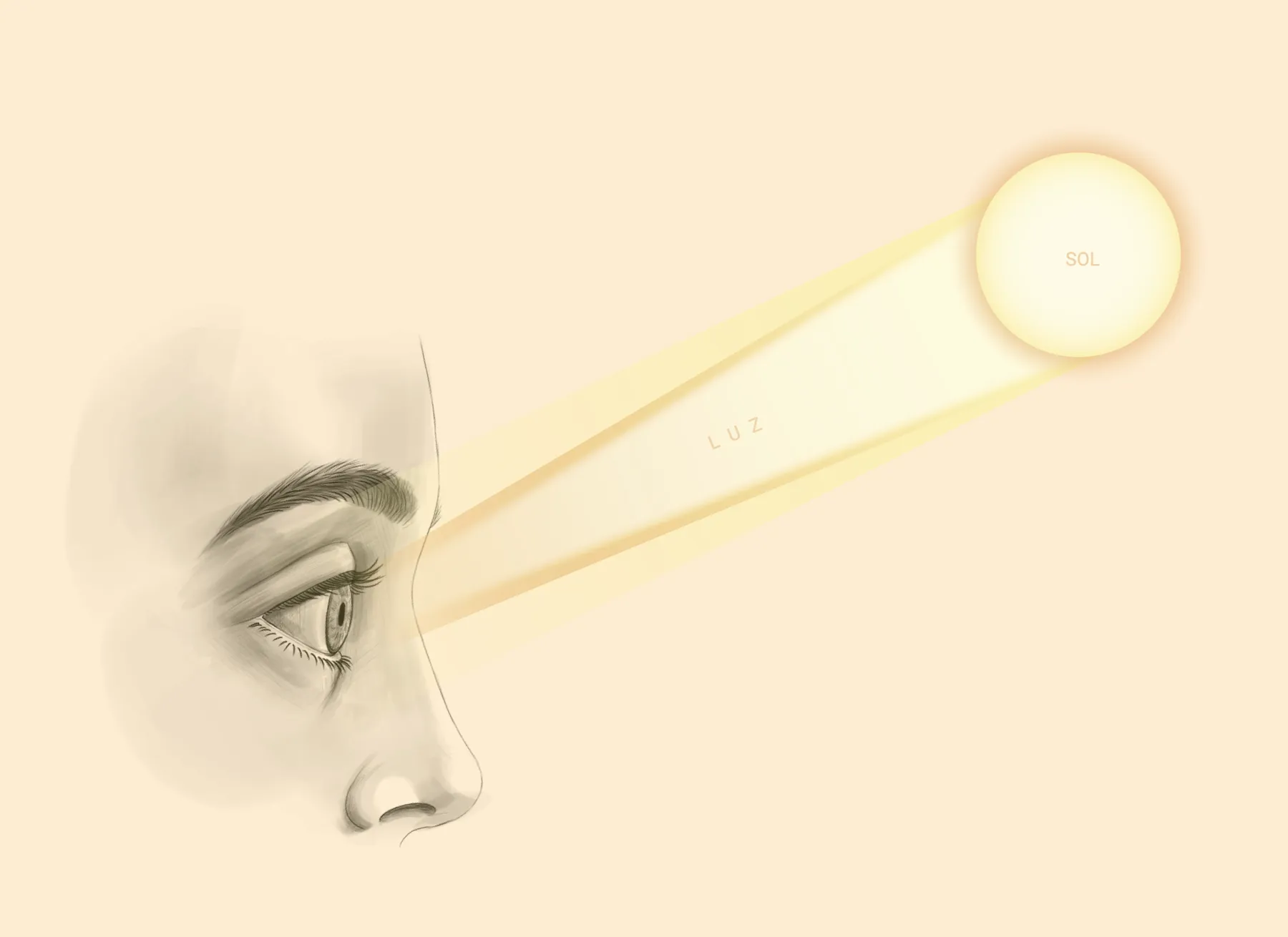
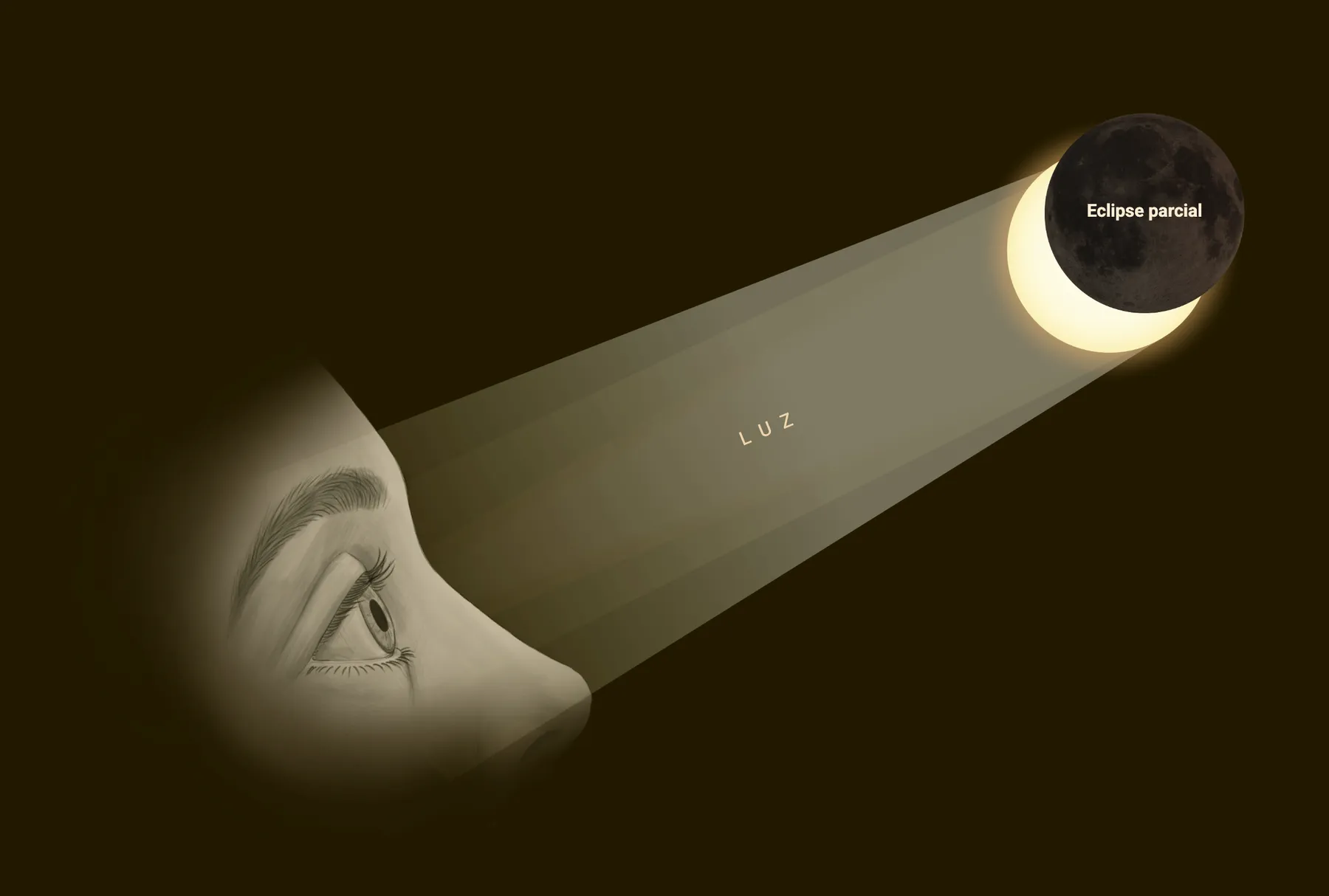
Looking directly at the Sun hurts, which is why we instinctively look away. But during an eclipse, with the solar disc partly covered, that discomfort fades -- and that's exactly what makes it dangerous: the retina can be damaged in seconds, without it being noticeable at the time.
Explaining with illustrations what happens to the eye when it looks at an eclipse unprotected
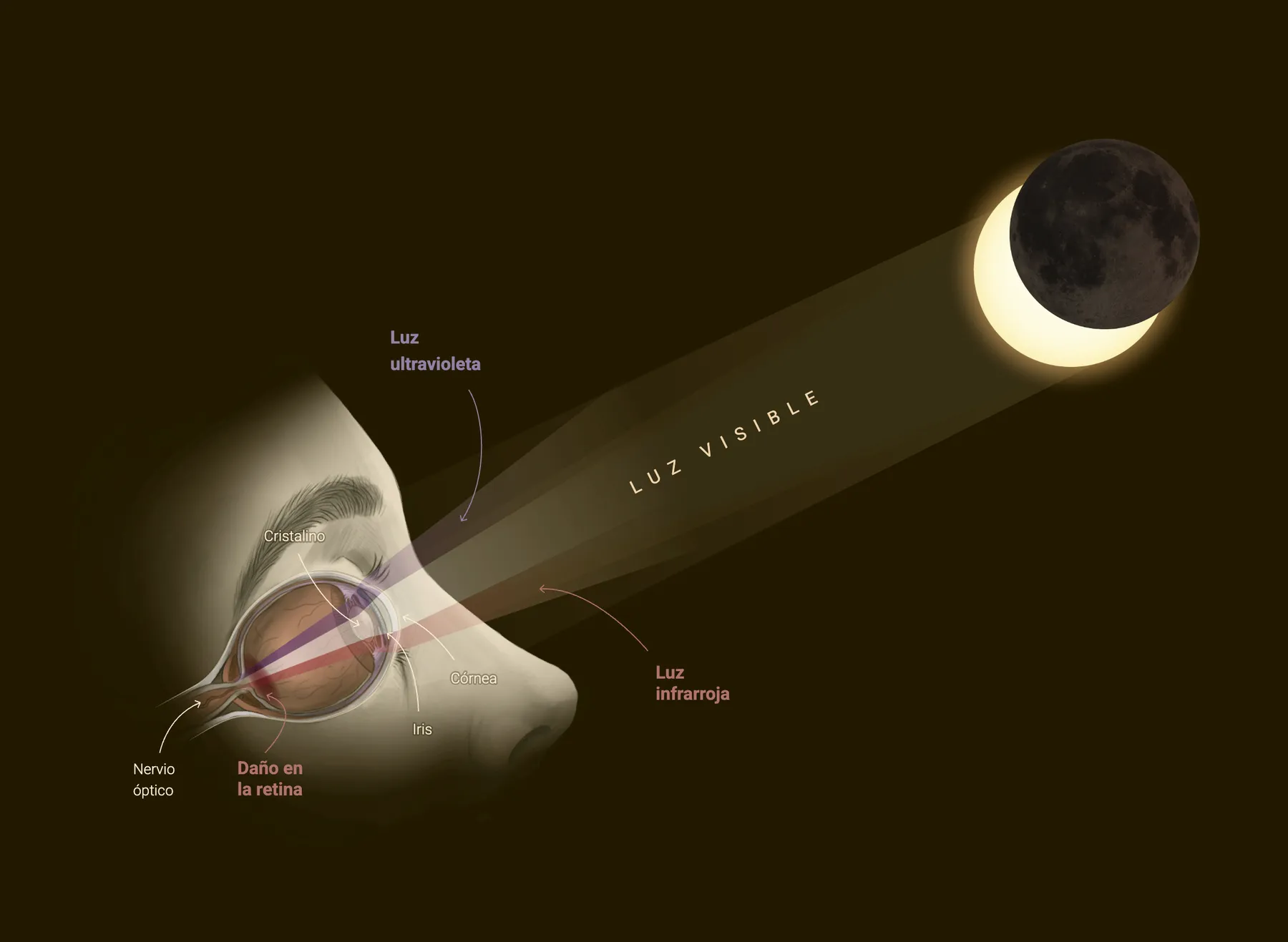
The Sun's visible light is focused onto the retina along with invisible ultraviolet and infrared radiation. Without a certified filter (ISO 12312-2), that radiation can burn the retina permanently and painlessly, because the retina has no pain receptors.Ordinary sunglasses don't filter enough light to look at the Sun even during a partial eclipse: certified solar filters or special eclipse viewers are needed.The only time it's safe to look at the eclipse without a filter is during totality -- when the Moon fully covers the Sun -- and only for the brief window it lasts, in Spain a maximum of 1 minute 50 seconds.